Showing posts sorted by relevance for query Electric Charging. Sort by date Show all posts

Monday, November 16, 2020

Work underway for Prince Rupert electric Charging station

BC Hydro workers back to the installation work on Monday
morning, as they put the finishing touches towards a
new electric vehicle charging station in the city

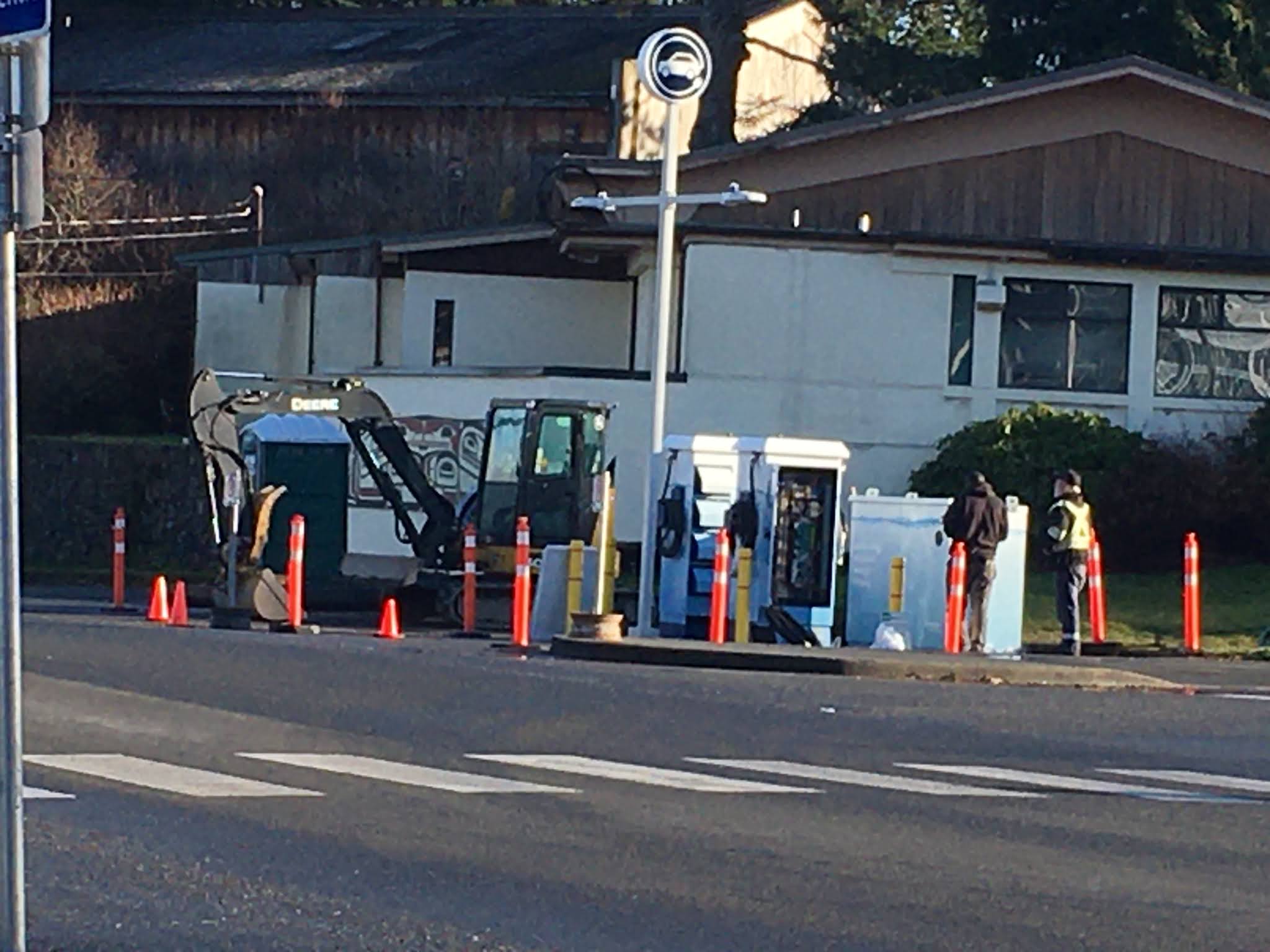
BC Hydro workers have been busy over the course of the last few days working hard at a site just to the north of the Prince Rupert Court House at First Avenue West and McBride, as they continue with their work on the installation of an electric car charging station in the downtown core.

The new electric charging station (red) is just 
to the west of Mariners Park

The much anticipated arrival of the charging station began late last week with the excavation of the work area and installation of cement supports, with the actual charging station apparatus now in place.

So far Prince Rupert's biggest booster of the new wave for energy, Mayor Lee Brain has not made mention of the significant step in his hopes for a 'cleaner transportation future'; something he hailed earlier this summer with word from the provincial government of the expansion of an electric charging network for the Northwest.

The electrifying activity downtown has also escaped notice of the City's range of information sharing options.

Mr. Brain, who is a member of the BC Climate  Solution Council has long been an advocate for the new energy option for vehicles and most recently spoke to the theme in September.

“This initiative is something that we've been working on at the Charge North Advisory Committee for the last two years and is an example of what can be accomplished when we work together as one to solve common objectives. This infrastructure is key to empowering the use of EVs in the North by our residents and tourists alike, planting the seeds for future economic development and signals that our region welcomes a cleaner transportation future.”

The Prince Rupert station a Level 2 EV charging station is just one of a number of stations that have been proposed for along the Highway 16 corridor between Haida Gwaii and Prince George.

Electric Charging stations (blue) have been proposed for
a number of Northwest and Haida Gwaii locations

In the September update, it was noted that Prince Rupert was destined to receive 2 of the electric charging stations, so where the next one goes could make for a nice diversion for residents as they ponder the possibilities.

So far there is no indication when the switch to turn on the new charging station across from Mariners Park will take place.

Update: As noted in our comments below, the Mariner's Park EV station is not part of the Charge North program; but rather is part of the BC Hydro EV Network initiative, funded by the Federal and Provincial government. 

Learn more about BC Hydro's roll out of EV charging stations across the province here.


To this point there do not appear to be many electric vehicles traversing the streets of the city, with the latest addition to the provincial network perhaps about to go online, it will be worth watching to see if there is a surge in electric car ownership in the area.

Some background on the road to the new energy future can be explored below:

2020

September 1-- "Planting the seeds for future economic development ... signals that our region welcomes a cleaner transportation future": Prince Rupert Mayor Lee Brain hails electric charging network announcement

2019

July 16 -- Province expands on vehicle charging station plans for 2019 
April 2 -- North Coast Regional District to move forward with Recycling Centre upgrade; other notes from March meeting
March 11 -- Mayor Brain to provide an update on plans for electric vehicle charging stations along Highway 16 at  Council tonight
February 6 -- Quest for funding continues, as NCRD hears update for electric charging system plan for Highway 16

2018

August 8 -- North Coast Regional District gains funding for further study on electric charging station plans through FCM/Federal funding announcement
July 9 -- BC Hydro fast charging plans bringing Highway 16 corridor one step closer to charging network
June 7 -- Renewable Rupert the next focus for City's Mayor


2017 


You can learn more about the provincial electric car initiatives from the links below:

Plug in BC

Clean BC

For more items of interest out of the provincial capital see our Legislature archive page.


Tuesday, July 16, 2019

Province expands on vehicle charging station plans for 2019


The ability to charge electric vehicles on British Columbia's highways is getting a little bit easier this summer, with the addition of more charging stations across the province as part of the CleanBCPlan.

Today the province highlighted the completion of work on 12 charging stations and its plans to develop six new DC Fast Charger sites through the summer.

While none of the 12 completed stations were found in the North, the majority of the upcoming projects over the next few months are set to be located along the Highway 16 and 97 corridors between Alberta and Hazelton.


“We’re making it convenient for people who drive electric vehicles to travel across the province. Our government is committed to reducing our carbon footprint. Investing in green infrastructure is a necessity when it comes to tackling climate change and reducing greenhouse gas emissions.” -- Claire Trevena, Minister of Transportation and Infrastructure

In their information release of today, the BC government noted that it's estimated that there are currently over 20,000 electric vehicles in use in the province, with up to 350,000 expected to be in use by 2030.

At the moment the province has over 1,700 charging stations located throughout the province. The Charge Hub map below, highlights the Northwest network to this point, with the only real gap found in the Prince Rupert area.


Earlier this year, at the March 13th Council session, Prince Rupert Mayor Lee Brain provided a snapshot of plans to create a Charging station program in Prince Rupert and updated the ambitions for along the Highway 16 corridor; with the ultimate goal that of a blue print that would see charging stations placed about every 60 kilometres along the highway.

At that session Council members moved forward with a plan for city staff to explore and map out potential locations for the charging stations, as well as to determine how many they may wish to place in the community.

Council indicated that they would be working on a timeline towards creation of the charging stations by 2020. So far however, no further details on the City's ambitions for the project have been released by council towards progress on their goals.

Some of the recent work on the electric charging plans can be reviewed below:

2019

April 2 -- North Coast Regional District to move forward with Recycling Centre upgrade; other notes from March meeting
March 11 -- Mayor Brain to provide an update on plans for electric vehicle charging stations along Highway 16 at  Council tonight
February 6 -- Quest for funding continues, as NCRD hears update for electric charging system plan for Highway 16

2018

August 8 -- North Coast Regional District gains funding for further study on electric charging station plans through FCM/Federal funding announcement
July 9 -- BC Hydro fast charging plans bringing Highway 16 corridor one step closer to charging network
June 7 -- Renewable Rupert the next focus for City's Mayor

2017 


You can learn more about the provincial electric car initiatives from the links below:

Plug in BC

Clean BC

For more items of interest out of the provincial capital see our Legislature archive page.


To return to the most recent blog posting of the day, click here.

Monday, July 9, 2018

BC Hydro fast charging plans bringing Highway 16 corridor one step closer to charging network


Last Friday, BC Hydro outlined the second phase of its electric vehicle fast charging network plans which will see 28 new stations introduced to the Southern BC corridor and  onto Vancouver Island,  an addition to the existing thirty stations that have been put in place since 2016.

As part of Friday's announcement, Chris O'Riley, BC Hydro President and Chief Operating Officer outlines some of the savings that can be found from the wider introduction of the fast charger system across the province.

"We're very pleased to provide this network of fast chargers to encourage electric vehicle drivers to get out and explore B.C. this summer. 

Electric vehicles are a great option for British Columbians looking to reduce their impact on the environment because we generate 98 per cent clean electricity. 

They also help lower their driving costs by around 75 per cent."

With the increase of charging station availability across the province, BC Hydro has see a steady increase in their use since 2017, with the volume of users at existing stations across the province increasing by 63 percent in the last year alone.

More on the BC Hydro Fast Charging network can be reviewed here.

The full list of the stations to this point can be viewed here.


BC Hydro's existing network of electric vehicle charging stations so far
only runs as far North as Kamloops

As part of Friday's announcement, BC Hydro noted that the third phase of the charging network program will see attention directed to Northern BC.

First with plans for a network from Kamloops to Prince George and eventually across the Highway 16 corridor to Prince Rupert.

No timeline was revealed on Friday as to how long BC Hydro anticipates being able to deliver on its electric charging network for Northwestern British Columbia.


BC Hydro is looking north next for expansion of its vehicle charging network
With plans first for stations between Kamloops and Prince George, followed
later on by a network from Prince George to Prince Rupert.


That will be welcome news for Prince Rupert Mayor Lee Brain and those he works with on the Highway 16/97 Electric Vehicle Advisory Committee, which most recently met in Smithers and Prince George for discussions on the plans for expansion of a vehicle charging network.

At that session in May, Mr. Brain noted some of the progress that the group had found to this point towards their goals of a charging network for the North.


The focus on the vehicle charging projects has been a key element of the Mayor's overall sustainable city initiatives program over the last four years,  you can review more on those ambitions from our archive page here.


To return to the most recent blog posting of the day, click here.

Tuesday, September 1, 2020

"Planting the seeds for future economic development ... signals that our region welcomes a cleaner transportation future": Prince Rupert Mayor Lee Brain hails electric charging network announcement

The plans for EV charging stations for Northwest BC
gained a bit more momentum today with a
Federal/Provincial announcement

For travellers of the near future, the road across the Northwest will feature a range of electric charging locations, with word today from the Federal and provincial government of plans to expand on clean energy and vehicle infrastructure across Northern BC.

The Tuesday morning announcement highlighted a number of electronic vehicle charging stations to be introduced along the Highway 16 corridor, with the project set to more than double the number of Level 2 EV charging stations to be made available from Prince George to Haida Gwaii

More than $345,000 through the provincial CleanBC Communities Fund and $415,000 through federal government’s Green Infrastructure Stream of the Investing in Canada Infrastructure Program will support these expansion projects. The participating regional districts, municipalities and First Nations will contribute more than $275,000 to the project.

Prince Rupert Mayor Lee Brain, who is currently a member of BC's Climate Solution Council and who has long been an advocate of the EV charging initiative, the focus is on partnerships and sewing seeds for the future.

“This initiative is something that we've been working on at the Charge North Advisory Committee for the last two years and is an example of what can be accomplished when we work together as one to solve common objectives. This infrastructure is key to empowering the use of EVs in the North by our residents and tourists alike, planting the seeds for future economic development and signals that our region welcomes a cleaner transportation future.”

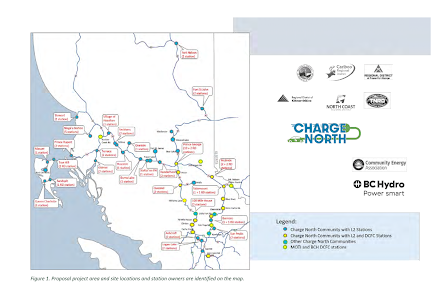
Red icons denote EV charging stations coming soon,
Blue icons the Level Two stations  announced today,
while 
Green indicate the EV charging stations now open.

(map from ChargeNorth)

Investment in the EV Stations will see new infrastructure in place in 25 communities across Northern and Central BC, in the Northwest and on Haida Gwaii the line up is as follows:

Burns Lake 1 station

Granisle 1 station

Hazelton 1 station

Houston 1 station

Kitimat 2 stations

Nisga'a Nation 5 stations

Prince Rupert 2 stations

Smithers 2 stations

Stewart 1 station

Terrace 2 stations

Haida Gwaii will see four stations built, 1 each at Masset, Tow Hill, Sandspit and Queen Charlotte

As for the two stations planned for Prince Rupert, there were no details relayed as to where they may be located in the city or when they are expected to be in operation. 

In a Facebook post that followed today's announcement, Mr. Brain did note, that in addition to the two EV stations announced for Prince Rupert today, even more of the charging facilities are in the plans moving forward, including a Level 3 fast charger.

The Prince Rupert Mayor also provided some further notes from Charge North, adding the background to his Social Media field.

More on today's announcement from the Federal and Provincial government can be reviewed here.

Mr. Brain last offered an enthusiastic update for Prince Rupert Council on his desires towards a clean solution for vehicles back in March of 2019, that as Charge North began their planning for the network of EV charging stations of the future.

Some further background on the Northwest hopes towards EV Charging can be explored here.

For more items of note from the British Columbia Legislature see our archive page here.


Wednesday, February 6, 2019

Quest for funding continues, as NCRD hears update for electric charging system plan for Highway 16

Regional District members heard an update last month on the progress
towards an electric car charging station program for Northern BC

The plan forward towards providing for charging stations for electric cars was outlined at the most recent North Coast Regional District meeting of January, as the District's Corporate Officer delivered an update from the findings of Highway 16/97 Electric Vehicle Network Study.

As part of his presentation to the District Board, Daniel Fish outlined some notes from a meeting of the Advisory Committee in December, outlining how the Community Energy Association will be seeking funding through a Clean BC grant program, with plans to provide local governments with a funding requirement document sometime in February.

Once they have had a chance to review the document, local government officials will be asked if they are interested in hosting a charging station, and if they are, will they be willing to contribute between 2,000 to 5,000  dollars towards installation and contracted maintenance.

The last residents of the region had heard about the charging station plans for the North Coast and Haida Gwaii was back in August, when Committee had received funding for the study from the Federation of Canadian Municipalities.

The charging station project has been one that has been long advocated by Prince Rupert Mayor Lee Brain, who has travelled across Northern BC in the last year to explore sustainable energy issues, part of his Sustainable City 2030 program.

You can review some of the progress when it comes to the push towards electric charging stations along the Highway 16 corridor here.

For more items of note related to Regional District see our archive page here.

A wider overview of some of the Sustainable City plans can be explored from our archive page here.

To return to the most recent blog posting of the day, click here.

Friday, November 25, 2022

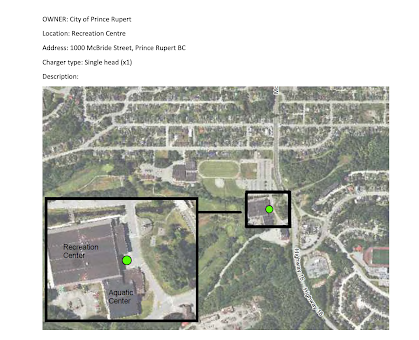
Civic Centre location is set for next wave of EV charging stations for Prince Rupert

Two Level Two Charging Stations similar to this one across
from Pacific Mariner's Park will soon be installed at
the City's Jim Ciccone Recreation Centre complex

Electric vehicle owners requiring a charging station will soon have a couple of new locations to plug in a in the community. 

With the City of Prince Rupert announcing today that the City's McBride Street Recreation Complex will be the next location in the community for the Level 2 Charging station model.

The outline to the plan ahead coming from the City's communication office this afternoon.

From their notes the City's Mayor Herb Pond noted of how the chosen location will be a natural fit for the community as it moves forward with electric charging stations.

“This charging infrastructure at one of our most locally used facilities is a great asset for Prince Rupert. It’s early days, but electric vehicles are becoming a more affordable option for residents and visitors. We need to be part of a shift to more sustainable transportation options.” 

The full announcement from today can be reviewed here.

The City advises that there may be some restrictions to public access in this area of the Recreation Complex parking lot (near the back entrance to the arena) during the installation.

There is no date included in today's message making to advise when the Stations are anticipated to be in service.

In their notes today, the city outlined how the installation at the Recreation Centre make use of“Level 2” stations, which add 30-40 kilometres of range per hour of charging.

This is the second set of Level 2 Stations, in addition to those already installed by BC Hydro across from Mariner’s Park. 

The Charging stations in Prince Rupert join a network across the Northwest in place as part of a program for  Charge North installations, BC Hydro and the Government of BC are adding Direct Current Fast Chargers, or “Level 3” stations, in communities and highway rest stops throughout the region. 

These can fully recharge a vehicle from empty in about an hour.

The City's plans to offer EV Charging at the Civivc Centre go bak a bit, we made note of some of the past announcements and planning towards the facility as those updates came out, you can review some of them below:

December 2021 -- Prince Rupert's Capital Spending plans bring EV Tutorial
November 2021 -- Next potential locations for EV charging stations in Prince Rupert are identified

Find out more about the Charge North Program here.

More notes on Civic themes can be reviewed through our Council Discussion archive.

Tuesday, August 10, 2021

EV motorists will soon be able to charge down the highway, as BC government expands charging station network

Prince Rupert's EV charging station will have some company
along Highway 16 by this fall with an ambitious expansion
program announced by the BC and Federal governments

Electric vehicle owners will soon be able to travel the Highway 16 corridor confident that a charge is as far away as the next town, that as the BC Government expands on its Clean BC initiative and puts in place a string of charging stations in communities around the Northwest.

In an announcement from last week, the EV charging  route was mapped out by both Federal and provincial officials, with Prince Rupert's first Avenue East charging station adjacent to Mariner's Park the western anchor for the new network.

The BC Government noted how the expanding BC Hydro charging infrastructure will offer confidence for motorists around the Northwest.

Fast chargers allow EV drivers to get approximately 250 kilometres worth of charge per hour. Having them located along travel routes and in other high-traffic public places makes it easier than ever for people to travel long distances in their EVs this summer and save on fuel costs while spurring economic recovery in B.C.

The list of charging options to be in place include the following:

100 1 Ave. East, Prince Rupert, two stations, operated by BC Hydro, open now
 276 City Centre, Kitimat, two stations, operated by BC Hydro, planned to open fall 2021
4646 10 Ave., New Hazelton, two stations, operated by BC Hydro, planned to open fall 2021
3743 Second Ave., Smithers, two stations, operated by BC Hydro, planned to open fall 2021
3487 9th St., Houston, two stations, operated by BC Hydro, planned to open fall 2021
111 Endako Ave., Fraser Lake, two stations, operated by BC Hydro, planned to open fall 2021
Ryley Lane, Vanderhoof, two stations, operated by BC Hydro, planned to open fall 2021
313 Hwy 16 W, Burns Lake, two stations, operated by BC Hydro, open now

Stikine MLA Nathan Cullen outlined the BC government's focus for the program ahead.

“Our government is charging ahead in expanding our electric vehicle fast-charging network. We are partnering with the federal government so more public fast-charging EV stations will be available along travel routes, making it easier for people to get around on B.C.’s highways and keep their EVs powered. Until now, owning an electric vehicle has been a challenge for rural Canadians, and this investment is another major step toward bringing clean, electric transportation to rural B.C. into reality.”

Plug in BC provides a helpful guide as to what other charging options are available across the province.

Further notes on the province's EV charger announcement can be reviewed here, links to some more expansive information on the Clean BC program are included at the bottom of that announcement.

More items from the provincial government can be explored here.


Wednesday, August 8, 2018

North Coast Regional District gains funding for further study on electric charging station plans through FCM/Federal funding announcement


It was announcement day on Tuesday, as the Federation of Canadian Municipalities and the Federal Government rolled out a large volume of funding announcements, delivering over 12 million dollars in funds to communities across Canada.

For Funding from the Municipalities for Climate Innovation Program, two projects with ties to the Northwest were successful in their quest for financial assistance.


Northwest Regional District and the Community Energy Association  got a boost for their Plans for electric vehicle charging stations on Highways 16 and 97, with 125,000 dollars to be provided to for further collaboration on that proposed network of charging stations.

That initiative was introduced to the North Coast in 2017 with the Community Energy Association providing its first update to Regional District at their December meeting.

Some of the background on the plans for charging stations across the Highway 16 corridor can be found below:

2018

July 9 -- BC Hydro fast charging plans bringing Highway 16 corridor one step closer to charging network
June 7 -- Renewable Rupert the next focus for City's Mayor

2017 


More background on the NCRD/CEA plans can be reviewed here.

Also receiving funding on Tuesday was the Kitimat-Stikine Regional District which will receive 125,000 dollars for a feasibility study as part of further review for options as greenhouse gas reduction at the Thornhill landfill site.

From the Municipal Asset Management Program Telkwa's plans for a water and sewer asset management system survey received 50,000 dollars in funding. The community near Smithers was the only one in Northwestern BC that was listed from yesterday's announcement from that funding program.

The money from the Federal government is distributed through the Federation of Canadian Municipalities, communities across Canada have an opportunity to apply for funding from a range of programs offered.


More items of note related to North Coast Regional District can be examined here.

As well, for a look at some of the sustainable energy initiatives under study for Prince Rupert and the North Coast see our archive page here.


To return to the most recent blog posting of the day, click here.

Thursday, December 16, 2021

Prince Rupert's Capital Spending plans bring EV Tutorial


Council members were energized at the prospect of two new Electric Charging stations for the community that were part of Monday's Capital Spending plans, with the topic generating a fair bit of conversation as part of the presentation earlier this week.

The 20,000 dollar project to be funded by surplus and a grant will see two Level Three charging stations placed at the Civic Centre and in the Cow Bay Area, a project we made note of in early November when the City announced an RFP for the twin sites.


The two locations for Level Two charging stations
identified by the City in an RFP from November

To open the Monday afternoon review on the planned spending, Councillor Gurivnder Randhawa noted of the two spots that Public works plans to install in the community.

Councillor Nick Adey then expanded on the discussion to the topic asking a few questions of the Director of Operations Richard Pucci.

"My question is maybe out of curiousity more than anything else, because I think these things are important and I fully support them. I'm just wondering if we have some sense  of the degree to which the one that exists is being used and what is the current demand  - and there's a good one, a good pun - for additional charging stations. And I'll say about it, that I would be in support of them anyway because I think that it's certainly a forward looking initiative, but I'm just wondering about usage at the moment.  

Towards the one referenced by Mr. Adey located across Mariner's Park, the Director of Operations noted he had no data on that station, observing how it was a BC Hydro installation.

"We actually don't have any data on the current usage of the one that's in town, that was provided by BC hydro that one. This is another one that is, I believe this is called Charge the North and this is the one where they're having installations all the way up Highway 16. We know there is a need for it in town there are more and more electric vehicles in town, so we're excited to put these in, but we don't have the data on how many people are using them daily"

Mr. Pucci's comments provided an opening for Mayor Lee Brain to join in on the topic recounting some of the background to the Charge North Program.


"That initiative Charge North, is ... the idea is to have every sixty kilometres a charging station from Haida Gwaii to Kamloops. So part of the grant that this is part of, is a bulk purchasing program that all the communities and Regional Districts across,  six Regional districts are purchasing together to make sure that that network gets established.  On top of the fact that BC Hydro is also doing Level Three chargers all across the north as well, in like rest stop areas, down in our community as well. 

So the idea is that you will actually be able to drive from Prince Rupert to Vancouver without having to you know wait, it would take you four days now in an EV, hopefully it will take you a regular amount of time with this number of chargers in place."

In reply to a question from Councillor Randhawa as to what cost if any there will be any fees for the chargers the city has planned, Mr. Pucci noted that there would be no charge with the City to pay for the electrical cost.

The City's Chief Financial Officer Corinne Bomben  followed up to explain that the city's two EV chargers would be of a lesser output that the BC Hydro version.

"These  are small chargers, l'll just say that they are level two chargers they're not fast chargers, so as far as I understand it, it's just a little top up type charging. It's not ... the level three chargers like the one that BC Hydro had installed those are considered the rapid chargers, so and they can do a full charge"

The Mayor shared then some more notes on the difference between the chargers that will be in place in the community.

"The Three's are thirty minutes and the Level Two's could be up to four hours,  but the Level Two's are not designed ... they're branded as Shop and Stops.  So you go and you actually start charging and then you shop in the community that you're staying at there kind of waiting for their change to happen. So they're not necessarily designed for rapid, but  to more promote tourism and to have access to chargers in the community"

You can take in the full tutorial from the Council Video Archive starting at the 43 minute mark.


We've reviewed some of the past work on the EV Charging station plans through our archive page here.

More notes on Monday's Capital Spending session can be reviewed here, while the full account of the Monday Council session is available here.

A wider overview of past Council Discussion themes can be explored here.

Wednesday, March 13, 2019

Electric Vehicle charging program could be powered up by 2020


The path ahead towards the era of the electric car was outlined by Prince Rupert Mayor Lee Brain on Monday night, as he provided City Council with a snap shot of plans to create an electric vehicle charging station program along the Highway 16 corridor.


At Monday's Council session the mayor outlined the plan for EV charging stations that will  stretch from Haida Gwaii  and on further into the Cariboo along Highway 97 South.

In his presentation, the Mayor outlined the work of the advisory council, which he is a member of,  and how it is working towards introducing the electric vehicle stations across the Northwest.

As the Mayor explained it, the organization a partnership of five regional districts across the North is now known as Charge North and is currently developing its blue print of what the program of charging stations, to be located approximately every 60 kilometres along highway 16 will look like once it moves forward.


Mr. Brain noted that the bulk of the financing will come by way of grants through a range of funding programs, while each Regional District and municipality is required to contribute what the Mayor described as a small amount towards the initiative.

The work of Monday evening as the Mayor observed was to consider the resolution in front of Council, which was designed  to move forward the City's participation in Charge North.

A plan that would put in motion permission for City staff to explore and map out locations in Prince Rupert for the charging stations.

Depending on the preference, the cost of the stations would be either $2,000, or $5,000 towards whichever station they choose to go with and how many they wish to place in the city.

"If we were to do this independently it would be significantly more, but since we're applying as a massive group of communities across five regional districts, the cost is 2500 basically per community per station"  -- Mayor Lee Brain on the regional approach towards a charging station network along Highway 16

Mr. Brain also noted for Council, how the North Coast Regional District will be considered the lead applicant for the program and will also install a station, with one on Haida Gwaii and another on the North Coast.

We reviewed some of the background to the Regional District involvement with the project last month with this note on the quest for funding for the program.

A few of the Council members offered both statements of support towards the initiative, as well as to ask a few questions of the Mayor on the proposed charging station network.

Councillor Randhawa inquired as to the kind of timeline that the Mayor is looking at; Mr. Brain observed that if all goes well, there could be stations in the community as soon as next year.


Councillor Adey spoke in favour of the initiative, asking about if there were any concerns related to vandalism.  He was advised that there were concerns, noting that the highway stations would be installed by BC Hydro, as for repairs, any stations that may be damaged will be the responsibility of the host community.

Councillor Cunningham offered his support for the program, but had a question on what the charging time difference between Stage One and Stage Two stations was.

The Mayor noted that the difference was that Level Two is anywhere from a two to four hour charge, while Level Three is a thirty minute charge.

Mr. Brain added that these stations are also to double as a tourism piece as well, with displays to be part of the station to encourage those using the station to explore the community and its amenities.

Mr. Brain also noted that the standard for most communities is to be the Stage Two machines at $2,500 each.

For his part, Mr. Cunningham observed as to how problems could arise with the lower range chargers; with residents or visitors waiting to use them, the mayor did note that local residents would be able to charge their vehicles at their own homes.

The initial phase of the program would be a five year contract for installation and maintenance on the units to be placed in each community along the corridor, with options for renewal past the first five year term of the contract.

With a due date of March 15th fast approaching, the Mayor noted that the Council session was the night to get things done towards moving forward with the program.

You can review the full presentation from the Mayor through the city's Video Archive, starting at the 26 minute mark.


More background on the Mayor's themes of Monday can be found from our preview of Monday night's presentation, which you can review here, it includes some of the material that the Council members had a chance to look over related to the proposal.

Further notes on sustainability issues championed by the City of Prince Rupert can be found on our archive page here.

For more notes on Monday's Council session see our Council Timeline feature here, a wider overview of Council discussion themes is available from our Council Discussion archive.


To return to the most recent blog posting of the day, click here.

Monday, March 11, 2019

Mayor Brain to provide update on plans for electric vehicle charging stations along Highway 16 at Council tonight


The progress towards development of an electric vehicle charging network along the Highway 16 corridor will make for a presentation from Prince Rupert Mayor Lee Brain at this evenings City Council session.

With some of the early report work now complete, the various Regional Districts of the North, including North Coast Regional District are looking to move the project forward, with a timeline for charging stations to be in place or at least in development by 2020.

As we noted in February, North Coast Regional District received an update for the program, with Directors hearing a presentation on the findings of the Highway 16/97 Electric Vehicle Network Study.

The Mayor has been an early advocated for the program across the Highway 16 corridor.

Some of the notes for tonight's presentation can be found below:


The electric charging network plans make for just some of the Mayor's focus on renewable energy and sustainability themes, a review of some of the other initiatives that he has been exploring can be reviewed from our archive page here.

For a look ahead to what else is on the agenda for the Council session see our Preview here.

More notes on Council Discussion themes can be found from our Council Discussion archive.

To return to the most recent blog posting of the day, click here.

Tuesday, October 31, 2023

Ellis Ross speaks in Legislature towards EV's and push to Zero emissions in BC


Bill 39 is on the Order list for this week at the BC Legislature, the Provincial Government's Legislation towards Zero Emission Vehicles in the province and through the Monday afternoon discussion, BC United MLA's raised a range of concerns over the BC NDP Government's ambitious targets.

The Bill which is in its Second Reading stage at the Legislature made some news last week with its target for the sales of new vehicles in BC which would see a goal of 100% vehicle sales by 2035.

The ZEV Act amendments will require automakers to meet an escalating annual percentage of new light-duty ZEV sales and leases, reaching 26% of light-duty vehicle sales by 2026, 90% by 2030 and 100% by 2035, five years ahead of the original target.

“This updated ZEV target reflects the success of our measures to shift rapidly to cleaner transportation. We’re taking action to encourage a cleaner British Columbia, while making headway on CleanBC’s mission to reduce emissions by 40% by 2030. These changes also support rising demand for cleaner vehicles on the roads and will make it easier for more people to choose an electric vehicle.” -- George Heyman, Minister of Environment and Climate Change Strategy

Among those in the thick of the debate Monday was Skeena MLA Ellis Ross, who used some of the time towards concerns over how the province's goals on Energy are going to impact on LNG development in the Northwest.

To the theme of Electric Vehicles, the Skeena MLA relayed some of his research in the constituency towards interest in EV's.

Up in Skeena where I represent — Kitimat, Terrace, Nisg̱a'a , Kitsumkalum, Kitselas, Kitamaat Village — I've asked all around my riding about what the interest is in electric cars, and there's very little, to be honest. But the ones I have talked to have not talked about their ideal vision about reducing emissions. 

It's all about the novelty of owning an electric car and how much speed it gets from zero to 60 as opposed to a gas-powered engine and all the electricity that goes into it. 

Of course, everybody knows the downside of owning an electric vehicle when you're talking about batteries in cold weather or even some of the other issues that are affecting electric cars. But it hasn't really affected us. We've got two new electric charging stations in Kitimat that nobody uses. They just sit there. 

I'm not quite sure about Terrace, but nobody has come to me saying: "We have to accelerate the targets of electric cars being utilized in B.C. by 2030 or 2035."

Ross also noted of affordability concerns for British Columbians as well as an electrical grid that may not be able to meet the demand if the NDP's push towards it's goals by 2035 come to fruition.

The previous target was 20 percent by 2025, and the new target is 26 percent by 2026. The previous target in the previous bill was 30 percent by 2030 and 90 percent by 2030. 

Instead of 100 percent by 2040, it is 100 percent by 2035 in this new bill. 

Very ambitious, but really haven't addressed a number of things, like affordability. A lot of the people that I represent cannot dream of owning an electric vehicle, let alone trying to think about how to charge it, how to pay for it. There are so many questions that I get asked about electric vehicles that I can't answer. Will it be charged in their garage at home? Will they be given free electricity? 

I think right now the B.C. government is realizing they just can't give out free electricity anymore. It was good in the beginning to give it out as an incentive, give out free electricity, but you can't sustain that, especially with the amount of deficit that this B.C. government has incurred, and the debt. 

You just can't keep giving out free electricity. You can't keep building free electric car infrastructure and not get a return. So at some point, we're going to have to consider the affordability factor. 

The Skeena MLA continued on towards the Hydro infrastructure question, highlighting how the development of an LNG Industry could have been electrified, but infrastructure limitations have impacted on that potential carbon reduction tool.

I haven't seen the government yet talk about who's going to pay for all this. I understand that the consumer is going to pay for the vehicle, maybe through the additional subsidies. But who's going to pay for the infrastructure upgrades? I haven't seen that yet. Maybe that comes out in regulation. Maybe that comes out with higher rates through B.C. Hydro. Maybe it gets passed on to the taxpayer through higher taxes or deficit financing. We haven't really seen that just yet. 

Why I ask that is because we've been talking a lot about B.C. Hydro upgrades from Prince George to Kitimat for the purpose of exporting LNG. We've been talking about that now for 15 years. I was part of two consultations in my community of Kitimat. And we supported it because we wanted to see that LNG get to Asia with as little emissions as possible. 

Unfortunately, it didn't work out. And now LNG Canada will burn natural gas to operate its turbines for the first phase, which will be converting natural gas to liquid natural gas. 

We're talking about 14 million tonnes annually. The emissions factor there…. So we missed the boat on electrifying that industry for the purpose of reducing emissions.

Ross also noted of emerging energy sources and how BC should consider those options towards carbon reduction; rather than increasing its push towards an all in EV Vehicle future.

But like I say, different parts of the world are moving to different energy sources, so while we potentially put the residents of B.C. in a very tough spot in terms of affordability and in terms of being forced to buy an electric vehicle, the rest of the world will be switching to different energy sources to achieve the same goals, like purchasing ammonia from Alberta, which, by the way, will get shipped through Prince Rupert. I think it's a great idea — ammonia. 

By the way, I would love it if the B.C. government could cooperate with the federal government to relieve the liability issues on the CN Rail to make sure that the ammonia coming from Alberta and the Cold Lake First Nation, by the way, gets their ammonia shipped to Japan. 

It's a great economic opportunity, and Japan will reduce its emissions without a zero emissions vehicles amendment act that basically forces residents of B.C. to buy an electric vehicle.

The Full presentation to the Legislature can be reviewed through the Legislature Video stream, starting at the 5:17 PM mark of Monday's session.

More notes from the BC Legislature can be reviewed here.

Wednesday, June 6, 2018

Mayor Brain in Smithers for discussions on expansion of electric vehicle charging network

Mayor Taylor Bachrach of Smithers took to Social Media  this week to
update the progress for an electric vehicle charging network 
(photo from Smithers Mayor's Facebook page)


The GPS is pointing east this week for Prince Rupert Mayor Lee Brain, who has travelled to Prince George and Smithers as part of his participation in the Highway 16/97 Electric Vehicle Advisory Committee.

The recently created committee is exploring ways to launch a network of vehicle charging stations that will operate from Haida Gwaii to Kamloops and takes in five Regional District's across the Northern half of the province.

The committee which is working with the Community Energy Association on the initiative recently was awarded 125,000 dollars in grant money from the Federation of Canadian Municipalities to assist in the planning for the EV charging network.

The timeline for the creation of the network is expected to take up to 20 months before the Northwest will have the capacity for those who drive electric vehicles to travel to the region with confidence of finding a recharge for their journey.

Tuesday evening, Mayor Brain outlined some of the work ahead for the group through a post to his municipal Facebook page.


North Coast Regional District heard more about the charging station plans back in December when the CEA's Dale Littlejohn delivered a presentation for the Regional Government group.

The City of Prince George also featured an expanded review of the network plans as it was presented to that municipal body earlier this year.


You can explore more about the Community Energy Association here.
For further items of interest related to City Council see our Council Discussion archive here.
To return to the most recent blog posting of the day, click here.

Thursday, November 4, 2021

Next potential locations for EV Charging stations in Prince Rupert area identified


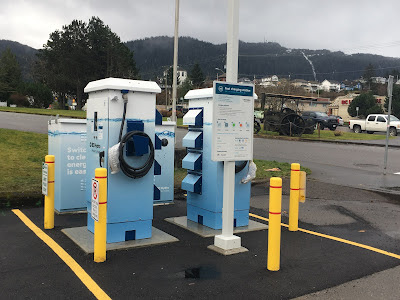
The existing EV Charging station across from
Mariner's Park in Prince Rupert, plans are in the
works to introduce more of the stations 

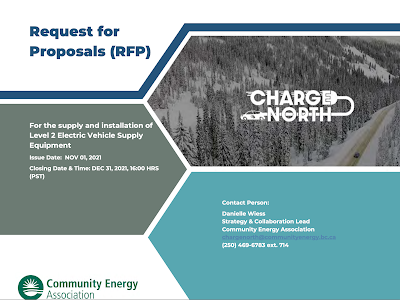
The road map for the introduction of additional Electric Vehicle charging stations across the north has been laid out this week through a Bid program put forward by Charge North, with two sites in mind in the Prince Rupert area to go with the current charging option across from Mariners Park.

The project is being moved forward by Charge North, which is supported by Six Regional Districts across the North, including North Coast Regional District as well as Northern Development Initiatives Trust, the Province of BC, the Federation of Canadian Municipalities and the participating communities. 


The project, facilitated by the Community Energy Association, will create a Level 2 charging station network that connects almost 2,800 km of highway from south of Kamloops to Prince George, along Highway 16 and onto Haida Gwaii (an area the equivalent size of the country of Italy).

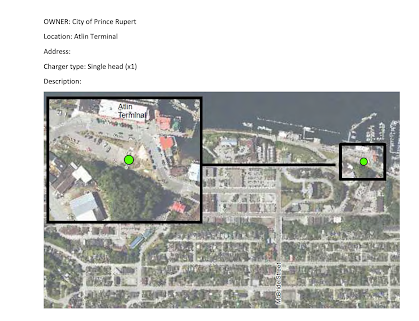
In the Request for Proposals that was posted to the BC Bid website on Monday, the two locations suggested as next up for an EV Charging station in Prince Rupert are at the Atlin Terminal parking lot and a space between the Civic Centre and Earl May Aquatic Centre.

click images above to enlarge

Prince Rupert is just one of a number of communities across the Northwest that will see the EV stations installed, with the Project also set to create a network across the region including Terrace, Kitimat, Smithers, the Nass Valley and Haida Gwaii to name a few.


The deadline to submit bids for the project is December 31st, 2021.

The installation plan would seem to have at least a two year timeline, with installations required to be completed by December 31st of 2023.

Residents across the Northwest can review the Full list of planned locations from the BC Bid package (under the North Coast Regional District file) , the documents feature a wide ranging review of what the project is all about and the expectations of Charge North for those looking to supply and install the Charging Stations.

Prince Rupert Mayor Lee Brain, who has long been an advocate towards the initiative,  hailed the future of Electronic charging back in September of 2020, when the first stirrings of the EV Charging initiative were put forward.


The existing EV Charging Station on First Avenue East across from Mariner's Park was installed one year ago, our notes at the time provided for a historical review of the path towards the future of transportation in the region.